
Industrial Sensing & Asset Intelligence
Transform your operational visibility into actionable business performance. Inter Connect Point (ICP) delivers enterprise-grade Industrial Internet of Things (IIoT) architectures, custom edge-sensing hardware, and real-time analytics designed to digitize, monitor, and optimize your entire value chain.
Whether managing high-precision manufacturing lines, remote critical infrastructure, or dynamic transit fleets, ICP equips enterprise decision-makers with the operational precision required to eliminate process variance, maximize asset yield, and secure predictable ROIs.
What We Enable
-
Process & Quality Automation: Replaces subjective operational thresholds with objective, multi-sensor array tracking (gas emissions, temperature, humidity, vibration) to ensure consistent batch-to-batch product excellence.
-
Asset Tracking & Fleet Intelligence: Real-time monitoring and control for both fixed infrastructure (water/electricity distribution, smart parking) and mobile enterprise fleets.
-
Low-Power Edge Networks: Robust, secure LoRaWAN® and encrypted multi-protocol communications built for remote, high-noise, or power-constrained industrial environments.
-
Real-Time Analytics & ML Insights: Cloud and edge analytics platforms that aggregate sensor streams into live visualization dashboards, automated triggers, and predictive quality models.
Featured Case Study
Precision IIoT & Machine Learning for Quality Assurance in Agro-Processing
Client Partner: Rwanda Mountain Tea Ltd. / Regional Tea Processors
Domain: Industrial Internet of Things (IIoT), Edge Sensing, and Predictive Quality Analytics
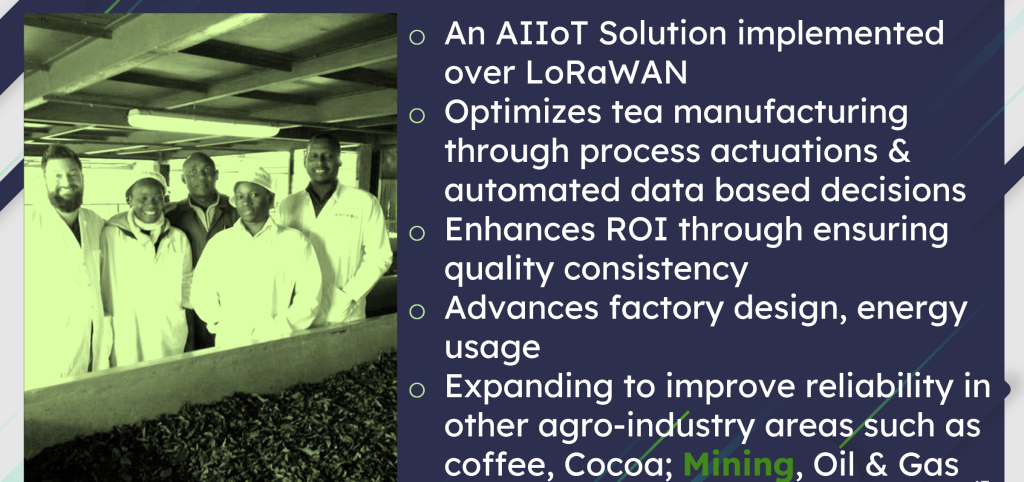
Case Study: Rwanda Mountain Tea Limited, Nyabihu, Rwanda
The Challenge
In traditional black tea processing, critical steps like withering, fermentation, and drying are guided largely by human sensory judgment and rudimentary measurement tools. Because human perception varies based on individual experience and external factors, factories experience quality inconsistencies between production batches. These variations result in lower market grading, reduced auction prices, and revenue leakage for both processors and smallholder supplier communities.
While high-end laboratory techniques (such as infrared spectroscopy) exist, their high cost makes them impractical for wide-scale deployment in agro-industrial operations across emerging markets.
The Solution
Inter Connect Point developed a low-cost, high-precision IIoT hardware and analytics infrastructure to digitize and automate quality control throughout the production cycle.
-
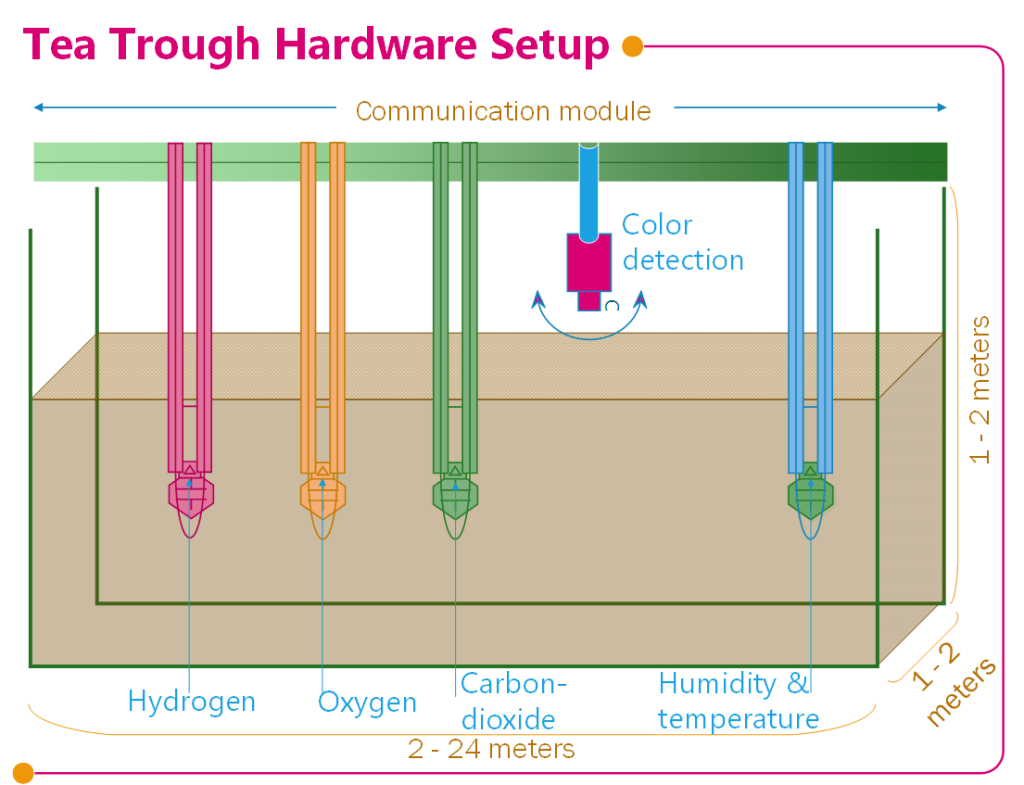
Custom eNose Sensor Array: Designed low-power edge nodes equipped with an electronic nose (eNose) gas array (tracking CO_2, O_2, H_2, and emitted volatile compounds) alongside integrated ambient temperature and relative humidity sensors.
-
Encrypted LoRa® Wireless Infrastructure: Deployed long-range, encrypted LoRa® wireless communication protocols to reliably aggregate continuous sensor data across complex factory floor environments.
-
Machine Learning Analytics Engine: Integrated cloud-based data analytics using supervised and unsupervised machine learning models (Principal Component Analysis, K-Means Clustering, and Regression Models) to analyze emission patterns, predict optimum process completion times, and identify ideal fermentation thresholds tied to peak market prices.
-
Real-Time Operational Dashboards: Exposed real-time stream data through customized APIs and web/mobile dashboards for active supervisor intervention and automated system triggers.
The Business Impact
-
Batch Consistency: Eliminated subjective guesswork during key fermentation phases, ensuring output consistently hits target quality specs.
-
Higher Yields & Revenues: Optimized process control leads directly to higher-grade tea classifications at market auctions, increasing top-line margins for processors and out-grower farmers alike.
-
Scalable Agro-Industrial Framework: Proved the viability of transferring low-cost eNose and edge-analytics architectures to adjacent dynamic processing value chains, including coffee and cocoa.
-
Peer-Reviewed Scientific Validation: Findings and operational system designs were published and peer-reviewed by IEEE (IEEE Global Conference on Artificial Intelligence and Internet of Things). Read the IEEE Article.
Technical Comparison: ICP AIIoT Automation vs. Traditional Workflows
| Technical & Operational Dimension | Traditional Manual Sensory Workflows | ICP AI-Powered Agro-Industrial Automation |
| Sensing Mechanism | Human olfaction, visual inspection, and tactile checks by factory operators. | Multi-channel Electronic Nose (eNose) VOC gas arrays, penetration probes, and flange-mounted duct sensors. |
| Data Resolution & Frequency | Intermittent, manual spot-checks (e.g., every 30–60 minutes). | Continuous real-time telemetry (second-by-second sampling with automated logging). |
| Impact of Ambient Weather | High susceptibility to seasonal temperature/humidity fluctuations causing batch variance. | Dynamic climate resilience via predictive edge ML models adjusting process parameters in real time. |
| Measurement Subjectivity | High intra- and inter-operator variability based on fatigue, shift changes, and individual perception. | 100% objective, repeatable digital baseline reverse-engineered from target quality profiles. |
| Latency & Response Time | High lag; adjustments are made reactively after quality degradation or over-fermentation occurs. | Sub-second edge detection with closed-loop SCADA/PLC integration for instant automated corrections. |
| Data Transmission & Range | Paper logbooks or manual terminal entry. | Long-range LoRaWAN® telemetry (up to 100 km) with cellular/satellite fallback. |
| Power & Infrastructure Needs | Relies on manual labor presence; susceptible to grid power interruptions. | Ultra-low power edge nodes featuring Wake-on-Radio (WoR) logic for multi-year battery operation. |
| System Maintenance & Updates | Periodic retraining of personnel; high turnover risks losing operational knowledge. | Over-The-Air (OTA) firmware updates, automatic drift detection, and continuous AI model optimization. |
| Financial & Deployment Model | High recurring labor costs and variable yield loss from batch spoilage. | Analytics-as-a-Service (AaaS) with zero upfront hardware CapEx and full hardware replacement SLAs. |
Ready to Digitize Your Operations?
Discover how custom IIoT hardware and targeted analytics can elevate your production quality and asset efficiency. Contact ICP’s Systems Engineering Team Today.